
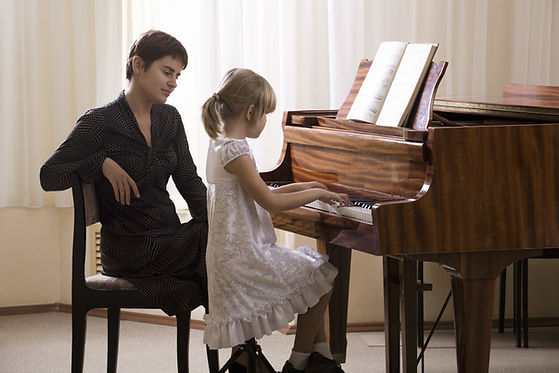
You know the student.
The one who shuts down at a traditional method book. The one whose last teacher said "maybe music just isn't for them." The one whose parents sit in the waiting room braced for tears.
It's not the student. It's the method.
Traditional piano instruction runs on trial and error — guess, miss, correct, repeat. For neurodivergent learners, that loop doesn't build skill. It builds avoidance.
The Young Method flips the order. Every step is arranged so the student succeeds first. You reinforce that success, then take the next small step. Errorless by design, driven by data at every level.

Student Plays "Sailing" — Errorless Piano in 30 Seconds
Certification
Eight modules, thirty lessons, built from the complete Young Method teacher manuals. Short quizzes along the way (70% to pass), hands-on practice throughout, and a teaching portfolio at the end.
Module 1 — Foundations of the Young Method
What the method is, the three learning paths, who it serves, and your first-lesson setup checklist.
Module 2 — Shaping the First Sessions
Pairing the piano with fun, the C-and-E "Sailing" setup (with demo video), taking your first baseline data, and token boards that actually work.
Module 3 — Prompting & Reinforcement in Action
The prompting hierarchy, the 3-second rule, reinforcement timing, and how to fade support without crashing progress. Demonstrated on video.
Module 4 — Data: The Teacher's Compass
Baselines and weekly probes, Data Sheet A, reading the trends, and making path decisions from the numbers — not from guesswork.
Module 5 — Fading Prompts Through the Levels
The full arc from Velcro key letters to real sheet music: C position and fingering, test songs, and aggressive prompt fading through Books 4–5.
Module 6 — The Remediation Path
When the data says "too hard": reading the distress signals, the Path 3 toolkit, and climbing back up with a plan.
Module 7 — Advanced Skills & Graduation
Both hands, sharps, sight reading, performance preparation, and graduating students to typical piano materials.
Module 8 — Professional Practice
Session design, student intake and placement, working with families, and assembling your teaching portfolio.
Piano Teachers
Piano teachers who want a method that reaches the students traditional books leave behind.
Are You a Candidate?
ABA Professionals
ABA professionals who want to bring music into their skill set with a behavior-compatible framework.
Music Therapists
Music therapists who want structured, data-driven piano instruction for their clients.
You need a piano background or an ABA background — not necessarily both. If you can play, or you understand behavior, the method meets you where you are.

FAQs
How long does it take?
It's self-paced — 30 lessons you work through on your own schedule, alongside short quizzes and hands-on practice.
What do I need before I start?
A piano background or an ABA background. You don't need both.
How am I assessed?
Short quizzes throughout (70% to pass, mirroring the method's own criterion) plus a final teaching portfolio: a mock lesson setup, a scored data sheet, a remediation case study, and a graduation plan.
Will I get students after certification?
Certification makes you eligible for paid contractor work with Innovative Piano, and certified teachers are first in line when families and schools in their area sign on. I can't promise immediate students — no honest program can.
Is this a license to teach the Young Method on my own?
No. This is a certificate of training — recognition that you've completed the coursework — not a brand license.
What if I've never taught a special-needs learner before?
That's exactly who this is for. The method assumes no prior special-needs teaching experience; it teaches you the framework from the ground up.

